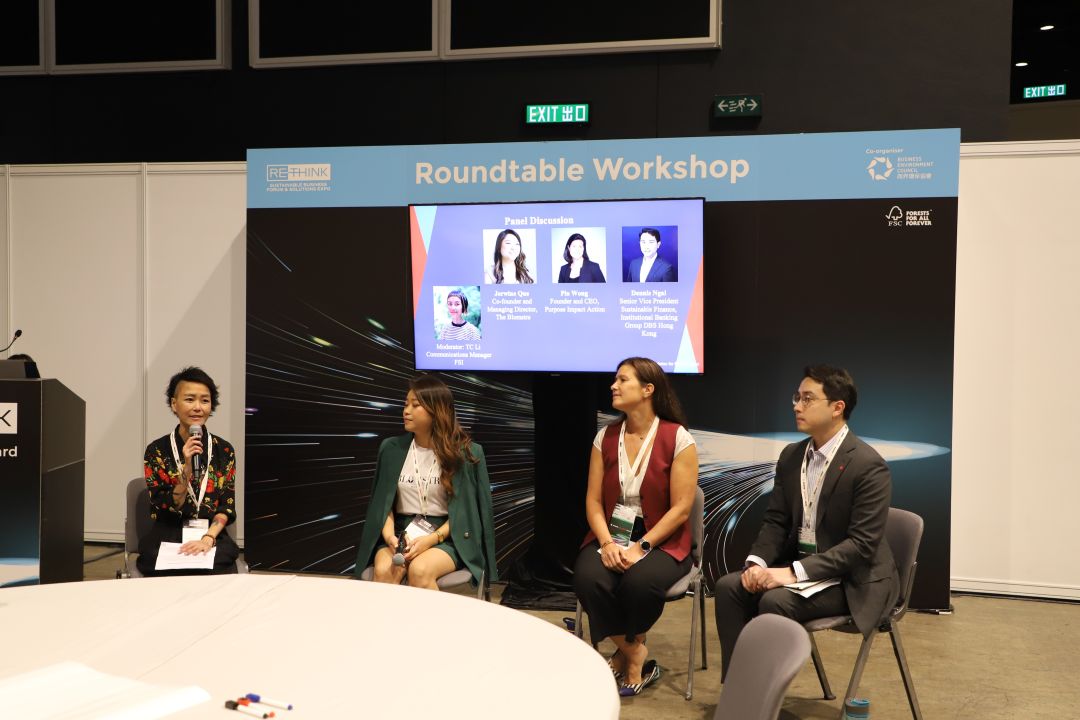
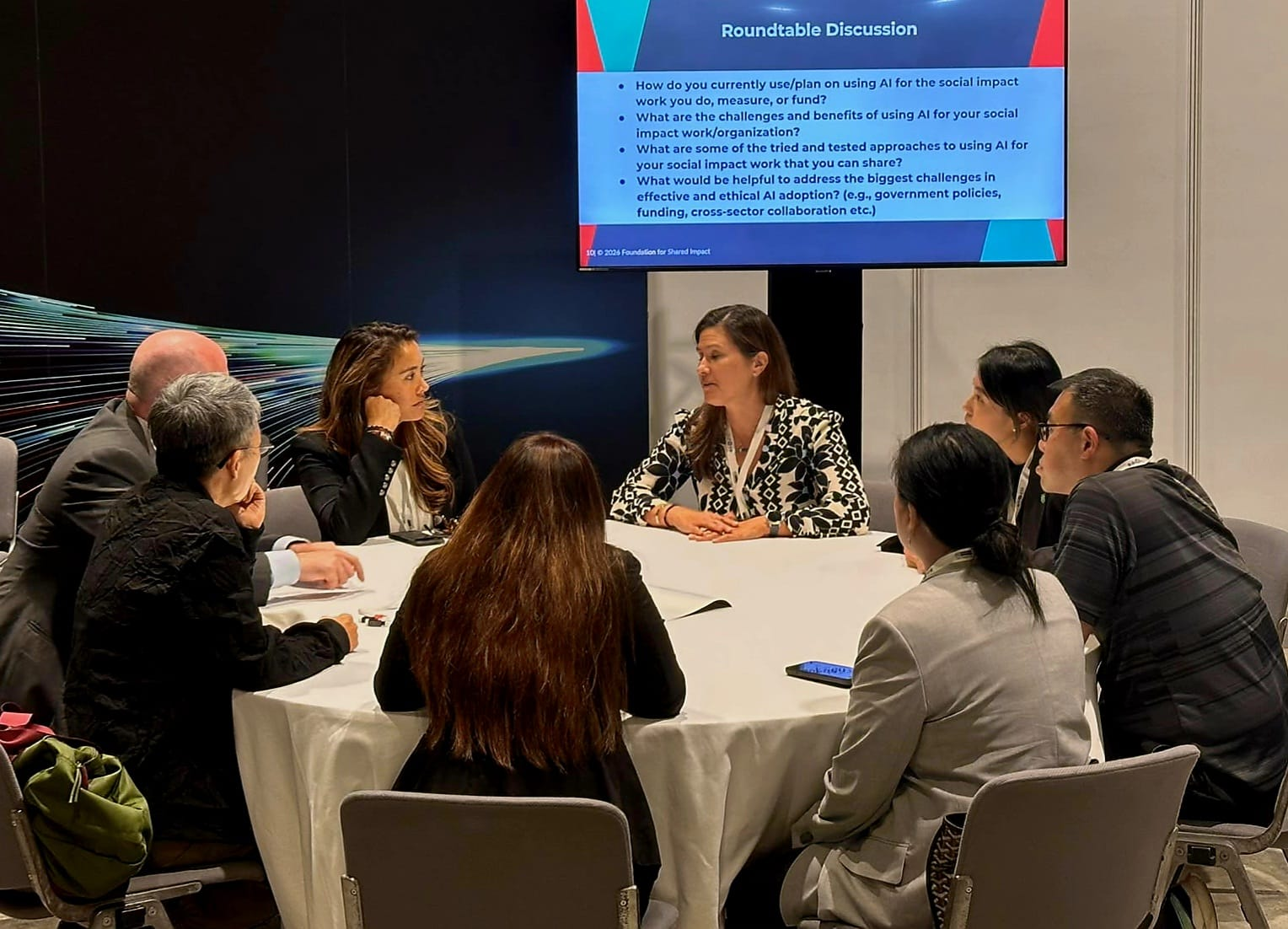
At the recent Foundation for Shared Impact (FSI) roundtable at ReThink HK, a group of practitioners, educators and social impact leaders came together to consider a timely question: How can artificial intelligence help us accelerate social impact and effective philanthropy – without losing the human judgment, trust and values that make impact meaningful?
This question builds on an earlier Purpose Impact Action reflection on the essential human role in impact assessment.
The discussion was energising because it moved beyond the familiar question of whether organisations should use AI. That question has largely been answered. The more important questions are: What should we use it for? Whose needs and values should shape its use? And how do we make sure that greater speed leads to better decisions, rather than simply more activity?
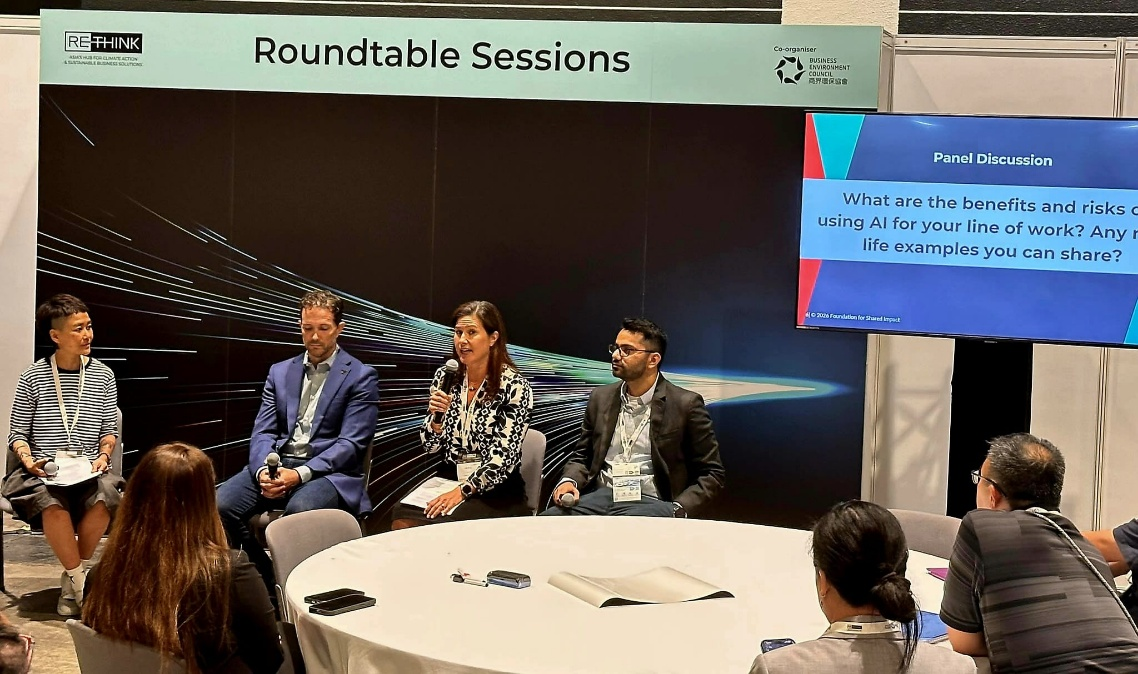
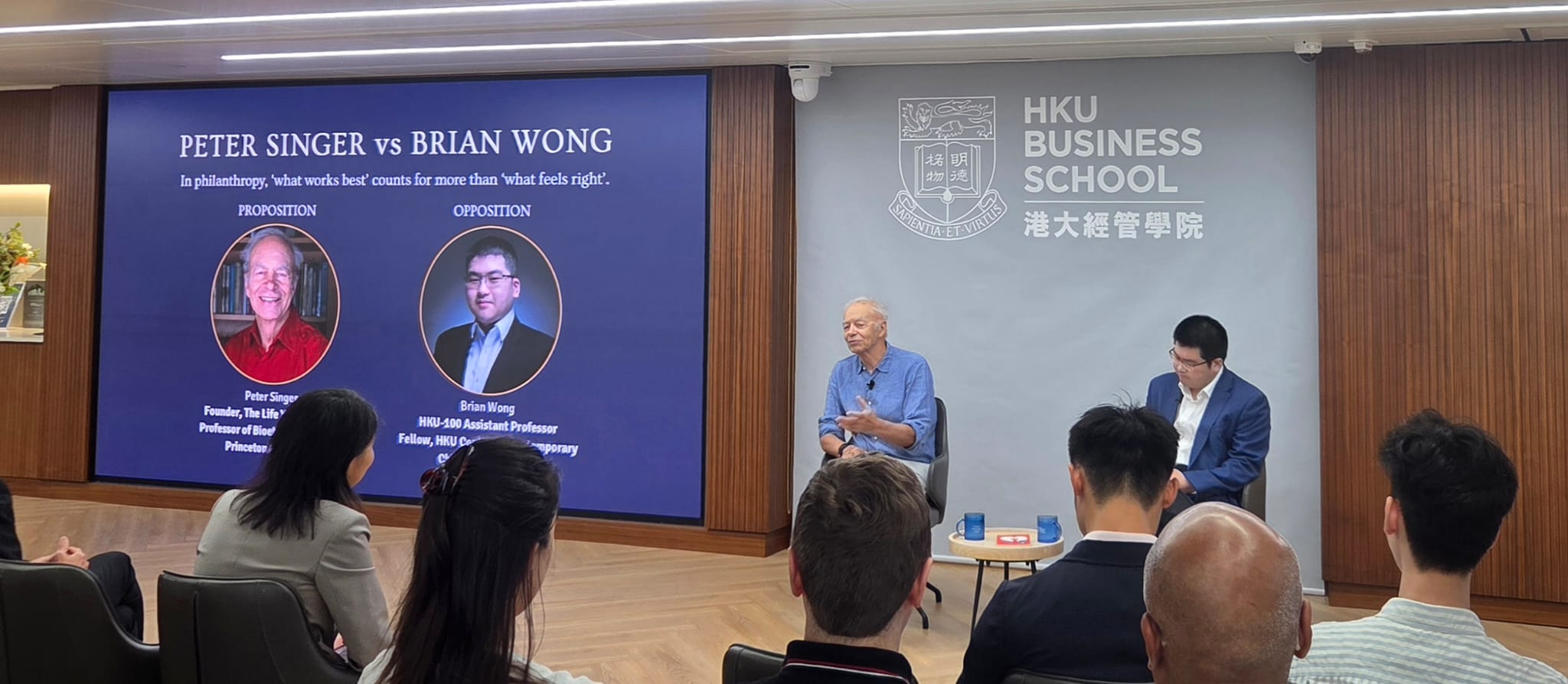
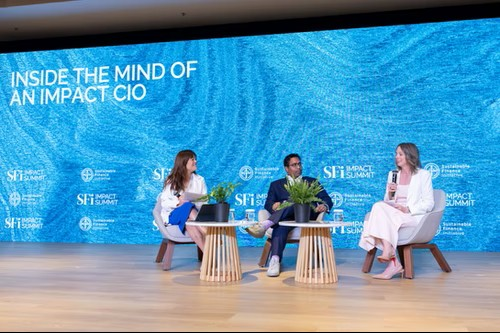
I was joined by David Bishop, Associate Professor of Teaching at The University of Hong Kong, and Paras Kalura, Chief Operating Officer at Migrasia, in a conversation moderated by TC Li from FSI. The examples shared were different in context, but they pointed to the same opportunity: AI can remove friction, extend capacity and make knowledge more accessible. Its value, however, depends on the systems, safeguards and human relationships around it.
AI is already changing how a lean team can work
At Purpose Impact Action, AI is helping us work across languages, geographies and complex bodies of information in ways that would previously have required far more time and resources.
One immediate benefit has been reducing language barriers. We have used live translation tools in Japanese–English stakeholder interviews and online workshops, as well as for working through data and documents. This has made it possible to engage more meaningfully with stakeholders in projects where the principal working language is not English. For a lean Hong Kong-based team, that can make the difference between declining a potentially valuable assignment and being able to contribute our impact measurement expertise across borders.
AI is also accelerating parts of our strategy and measurement work. When developing a Theory of Change – a clear, testable explanation of how an intervention is expected to create change – or an impact measurement framework, teams often need to review large volumes of programme information, map varied activities under common themes, and identify outcomes that are both meaningful and measurable. AI-assisted research and synthesis can support this process, particularly for complex portfolios where the work previously took weeks. It can help us bring structure to the material in days, leaving more time for the work that requires judgment: testing assumptions, facilitating dialogue and agreeing what success should look like.
The same is true in evaluation. Transcribing and summarising stakeholder interviews is no longer the bottleneck it once was. Used carefully, AI can streamline early qualitative-data processing and surface patterns for further investigation. That gives the evaluation team more space to interrogate the findings, examine contradictions, and understand the lived experiences behind the words.
The goal is not to automate impact measurement. It is to reduce avoidable administrative effort so that more attention can go to learning, interpretation and better decisions.
From more information to better infrastructure
David Bishop offered an equally important challenge. We should not see AI as a panacea, nor should we use it simply to make our current world a little easier. The more ambitious question is: How might we build a better world in which AI is part of the infrastructure for accountability, learning and collective problem-solving?
This is particularly relevant to Hong Kong’s social impact sector. Organisations often have specialist knowledge: a nuanced understanding of a community, a programme model that has been refined through years of delivery, or insight into why a particular intervention works in a particular context. In the past, turning that expertise into a useful digital tool could feel prohibitively expensive. Today, the technical barrier is falling.
David’s invitation was clear: organisations should stop, reflect on what they know uniquely well, and consider how that knowledge could be translated into responsible, AI-enabled tools. This could mean shared services that reduce duplicated administration, systems that strengthen monitoring, evaluation and learning (MEL), or more transparent processes for funding applications and grant analysis.
For funders, the implication is just as significant. If AI changes what is possible for grantees, then funding models and internal operations need to evolve too. Rather than asking organisations to produce ever more reports through fragmented processes, funders can invest in digital systems that clarify the impact they seek, track progress proportionately, and make learning more useful to both funder and recipient. Better systems can free organisations to focus on the work only they can do: building relationships, responding to communities and delivering change.
| Where AI can help | What people and organisations must still lead |
| Translating, transcribing and organising information | Building trust with stakeholders and interpreting context |
| Mapping programme information and drafting possible outcomes | Defining whose wellbeing matters and what meaningful change looks like |
| Synthesising qualitative data and identifying patterns to explore | Testing findings, challenging assumptions and making ethical judgments |
| Reducing repetition in reporting and grant processes | Designing funding relationships that are fair, transparent and useful |
| Scaling access to specialised information | Ensuring that access, safety and dignity are protected for everyone |
The hard part is not the technology
A recurring theme from the roundtable was that the technology itself is often the easier part. Adoption is harder. It requires change management, staff confidence, clear decision rights and a willingness to redesign workflows rather than simply layering a new tool on top of old processes.
It also requires honesty about risk. AI systems can hallucinate. In our own work, we have seen AI-generated summaries invent content within long transcription files. This is why human review is not optional. A fluent answer is not necessarily an accurate one, and an apparently complete report is not necessarily a sound analysis.
Data privacy and ownership are also central concerns, particularly when working with sensitive programme, beneficiary or stakeholder data. Organisations need to understand where data is processed, who can access it, how it is retained, and what protections are in place. These are not technical details to be addressed after a tool is adopted. They are governance questions that should shape the decision from the beginning.
There is also a broader sustainability consideration. AI may help organisations improve environmental, social and governance (ESG) practices, but large-scale AI infrastructure has real energy and water costs. Responsible adoption means considering both the benefit an application creates and the resources it consumes.
Impact is about people, not pixels
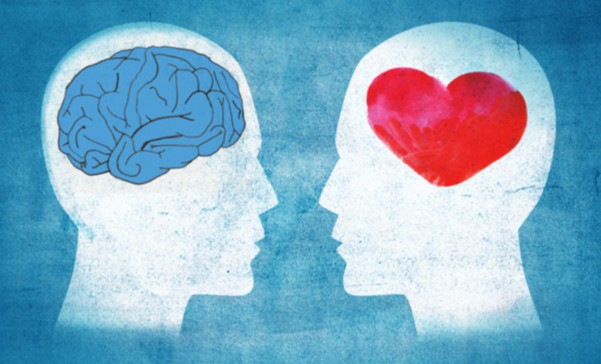
For me, the most important limitation of AI is also the simplest: AI can analyse, but it cannot understand why a community values something, what a family foundation holds dear, or what it feels like to navigate a service as a person whose voice has too often been overlooked.
In impact measurement, lived experience cannot be coded away. Before building an AI-supported survey, logframe or dashboard, we must ask whose definition of wellbeing is being measured. Co-creation with communities is not a nice-to-have; it is how we ensure that a system reflects local priorities rather than imposing an external view of success.
This is why the human role becomes more – not less – important as our tools become more powerful. We need people who can convene diverse perspectives, recognise that systems encode. In care, counselling, advice and companionship, technology may be able to assist, but it cannot replace meaningful human connection.
The next frontier: responsible, value-led adoption
The next frontier for AI in Hong Kong’s social impact sector is not merely operational efficiency. It is ethical accountability and predictive resilience.
That means grantmakers budgeting for appropriate tools and staff training, while requiring human review of consequential outputs. It means investing in data systems that help us anticipate risk and target resources earlier. It means ethical benchmarks for transparency, bias and safety, not only voluntary good intentions. And it means creating space for social impact organisations to design tools with, rather than for, the communities they serve.
David’s closing provocation remains with me: do not only ask how AI can make the current world easier. Ask what kind of world we want to build, then use these tools to help move us in that direction.
At Purpose Impact Action, we see AI as a powerful capability multiplier. It can help us move faster, work across borders and turn information into insight. But speed is not the destination. The destination is more credible, inclusive and useful impact practice – practice that helps funders make better decisions, helps organisations learn, and stays accountable to the people and communities at the heart of the work.
This roundtable reinforced a simple principle: our future with AI should be shaped not by what the technology can do, but by what we believe impact should be.
By Pia Wong
Founder & CEO, Purpose Impact Action
We would love to hear how your organisation is approaching AI in impact measurement, evaluation or philanthropy. Please share your thoughts or comments below.